Management
April 13, 2026

-Large.jpg)
Article banner: https://captain-tsubasa.world/character/
I used to think being a great leader meant being the “main player.”
You know… the one who closes the deal, fixes the campaign, jumps into every problem, and somehow saves the day.
Sounds cool, right?
Yeah… until everything depends on you 😅
The Moment That Hit Me
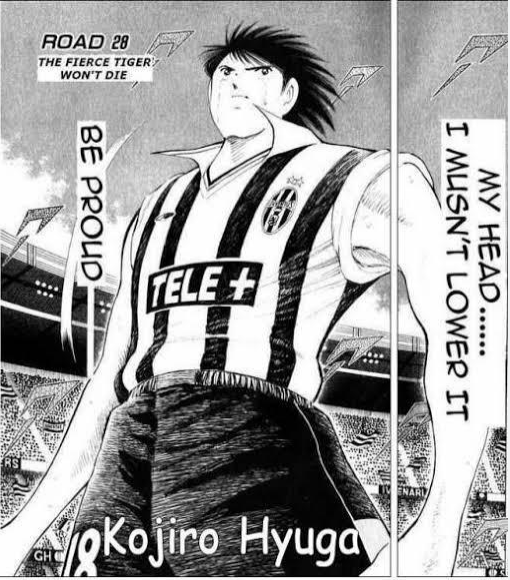
If you’ve watched Captain Tsubasa, you’ll remember Kojiro Hyuga (日向 小次郎).
For years, he played like a beast—pure power, pure ego.
Shoot from anywhere. Carry the team alone.
But here’s the thing…
Even with all that talent, Toho Academy kept losing to Nankatsu. Not once. Not twice. Repeatedly.
And that part hit me hard.
Because I’ve been there.
And Why It Didn’t Work
There was a time I handled almost everything myself:
- Campaign strategy? Me
- Ads optimization? Me
- Fixing landing page issues? Also me
At first, it felt efficient.
Faster if I do it myself.
No time to explain.
They’re not ready yet.
Classic.
But slowly, problems started stacking:
- I got overwhelmed 🔥
- Team stopped taking initiative 😴
- Everything became a bottleneck… me 🧱
And the worst part?
We weren’t actually growing.
We were just surviving.
The Turning Point 💡
Back to Hyuga.
In that final match, something changed.
He stopped trying to be the hero.
He passed more.
He trusted his teammates.
He played as part of a system—not the center of it.
And suddenly?
Toho didn’t get crushed anymore.
They matched Nankatsu. The game ended 4–4.
Not a win.
But a completely different level.
That’s when it clicked for me:
👉 Maybe the problem isn’t effort.
👉 Maybe the problem is how the team is structured.
What I Changed
I didn’t magically become a perfect leader overnight.
But I started doing a few simple things differently:
1. I stopped being the “fastest solution”
Every time I wanted to jump in and fix something, I paused.
Instead of:
Let me do it.
I started asking:
Who should own this?
At first, it feels weird 😅
But over time?
People stepped up.
2. I made roles super clear
Before this, everything was blurry.
Everyone was “helping”—but no one really owned anything.
Now:
- One person = one responsibility
- No overlap
- No guessing
Suddenly, accountability showed up.
3. I built simple systems (nothing fancy)
Not some complicated corporate framework.
Just basic things like:
- Checklists
- Repeatable workflows
- Clear steps for recurring tasks
This alone reduced so many unnecessary questions.
4. I started rewarding teamwork, not just results
Before:
I only cared about outcomes.
Now:
I pay attention to how the outcome is achieved.
- Did they collaborate?
- Did they support each other?
- Did they improve the system?
Because honestly…
A team that works well together will outperform any “solo genius” long-term.
5. I learned to trust
This one is still hard, not gonna lie.
Letting someone else handle something important feels risky.
But here’s what I realized:
If you never let them try,
they’ll never become reliable.
The Hard Truth 👀
Sometimes we say:
My team is not good enough.
But if we’re being honest…
- Did we give them clear roles?
- Did we build a system for them to succeed?
- Or did we just expect them to “figure it out”?
Because I’ve made that mistake.
And yeah, it’s not a team problem.
It’s a leadership problem.
So What Actually Builds a High-Performing Team?
Not talent alone.
Not long working hours.
Not even motivation.
It’s this:
👉 A system where people know what to do
👉 A structure that supports consistency
👉 A culture where trust actually exists
That’s it.
Simple, but not easy.
Final Thought
I used to think:
If I perform better, the team will win.
Now I think:
If the system works, everyone performs better.
Just like Hyuga.
He didn’t become weaker when he stopped being the hero.
He became more dangerous—because now, he had a team.